
Wrist and Thumb Pain in Pregnancy and Postpartum: What’s Actually Going On

Wrist and Thumb Pain in Pregnancy and Postpartum: What’s Actually Going On
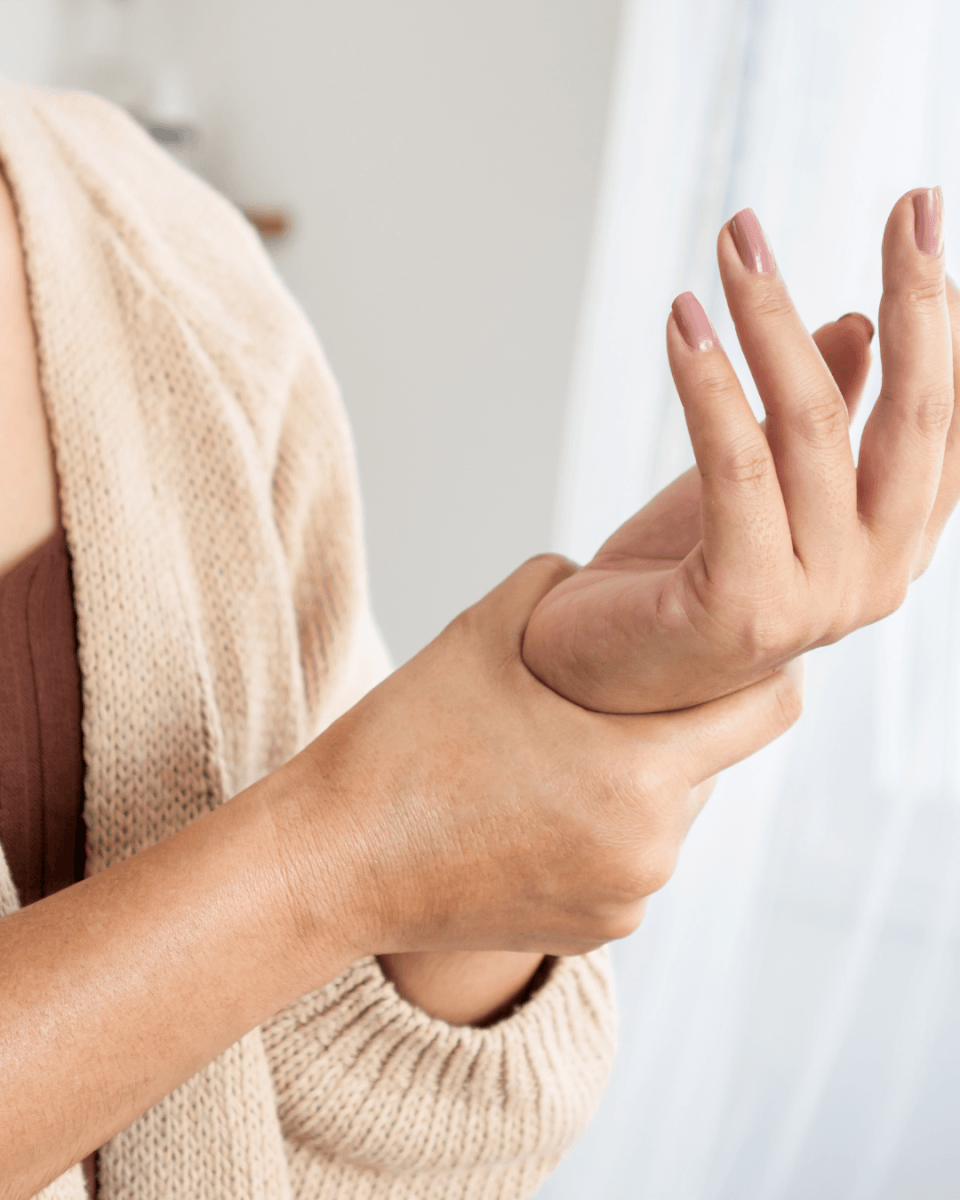
If your wrists or thumbs have started aching during pregnancy, or gotten worse since you started lifting a baby dozens of times a day, you’re far from alone. Wrist and thumb pain is one of the most common, and most overlooked, physical changes that come with the childbearing year.
Pelvic health physiotherapist Jamie Singleton breaks down what’s really happening, and the good news is that in most cases, it doesn’t mean stepping away from exercise altogether.
Why Pregnancy and Postpartum Are So Hard on the Wrists
Pregnancy brings a genuine increase in blood volume, up to 20 percent more circulating fluid, along with more general fluid retention throughout the body. In a tight space like the wrist, that extra fluid can put real pressure on nerves, tendons and ligaments. Add to that the increased ligament laxity that comes with pregnancy hormones, postural changes as the body’s centre of gravity shifts, and the sheer physical demand of lifting and feeding a baby postpartum, and it’s easy to see why wrist and thumb pain shows up so often.
Two conditions in particular tend to come up again and again.
Carpal Tunnel Syndrome
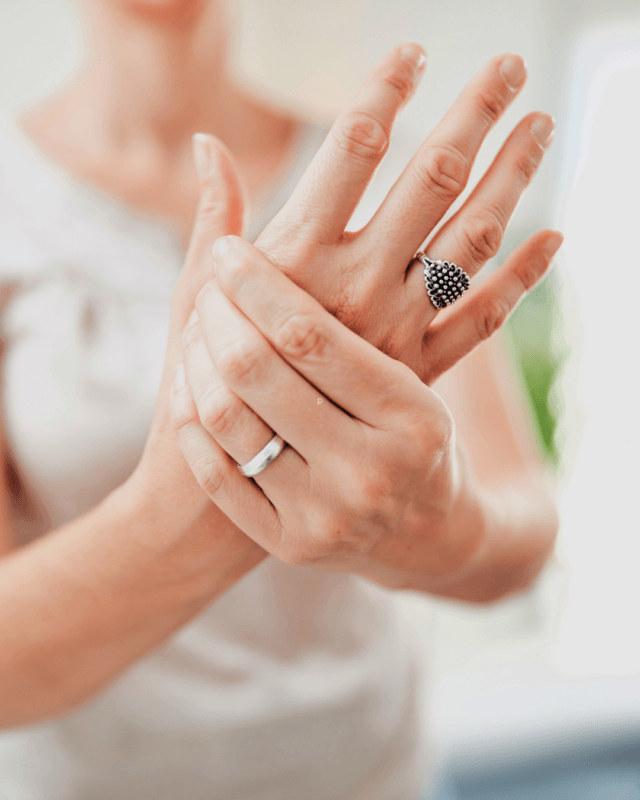
Carpal tunnel can affect as many as one in three women during the childbearing year, and it often shows up in both hands. It happens when swelling or increased movement in the wrist compresses the median nerve, which runs through a narrow tunnel formed by the carpal bones and a ligament called the flexor retinaculum. The result is tingling, numbness, pins and needles, and sometimes sharp pain that can wake you at night.
It tends to peak during the third trimester, when fluid retention is at its highest, and for many women it improves significantly by six to twelve months postpartum, partly linked to hormonal shifts through breastfeeding.
De Quervain’s Tenosynovitis
Named after the person who first identified it, de Quervain’s is inflammation in the sheath surrounding the tendons on the thumb side of the wrist. It’s more common in the postnatal period than in pregnancy itself, and it’s closely tied to the repetitive hand positions involved in lifting and holding a baby. Pain when gripping, making a fist, or twisting the wrist is the hallmark sign, and it can make everyday tasks like picking up a baby, doing dishes, or even brushing your teeth genuinely difficult.
Left unmanaged, either of these conditions can become chronic, so early attention matters. The good news is that the prognosis for both is generally good, particularly with early, appropriate care.
What Helps
A few practical strategies can make a real difference, both in daily life and during training.
Wrist position matters more than most people realise. A neutral wrist, not flexed, not fully extended, puts the least strain on already irritated tissue. That applies just as much to how you hold and lift your baby as it does to how you lift weights.
When it comes to exercise, small adjustments go a long way. Dumbbells with a neutral grip, palms facing each other, tend to be kinder to the wrists than a barbell. Where possible, shifting load through the forearms rather than the hands, think forearm plank instead of a full push-up position, can take pressure off an area that’s already under strain. Taping can also offer helpful proprioceptive feedback, reminding the body to avoid pushing into painful ranges.
Simple daily changes help too. Moving the whole arm rather than just the wrist when brushing teeth or hair, using pre-cut vegetables to reduce repetitive chopping, and getting support through the forearms while breastfeeding can all reduce the cumulative strain that builds these conditions in the first place.
Ice baths, gentle massage, and tendon gliding exercises, alternating between a flat hand, a hook, a fist and a straight reach, can also support recovery. The priority throughout is working within pain free range. Pain during exercise with these conditions is a sign to modify, not push through.
Why the Whole Body Matters, Not Just the Wrist
A lot of wrist overuse actually stems from weak trunk, core or shoulder control. When the body compensates through the hands and wrists instead of working through bigger, stronger muscle groups, the small joints end up carrying more load than they’re built for. Building better postural awareness and core engagement isn’t just good general practice, it’s often part of what actually resolves wrist pain long term.
When to Refer On
If symptoms are worsening, not improving, or significantly affecting quality of life, referral to a physiotherapist is worthwhile, and in most places, women can self-refer without needing a GP referral first. Early intervention genuinely improves outcomes, so there’s no need to wait until things become unmanageable.
Wrist and thumb pain can feel like a small, easily dismissed complaint, but for many mums it affects everything from exercise to simply holding their baby comfortably. Understanding what’s actually happening, and making a few thoughtful adjustments, can make a meaningful difference.
Find a MumSafe™ Trainer near you or online and train with someone educated in women’s health, postnatal recovery and safe, progressive exercise. Sessions are designed to support your recovery, your strength and your wellbeing as a whole person, not just your fitness goals.
👉 Click here to find a MumSafe™ Trainer near you or online.
Are you a trainer who wants to better support breastfeeding and postpartum mums?
If you’re a fitness professional wanting to deepen your understanding of postpartum recovery, breastfeeding considerations and safe programming for mums, MumSafe™ provides education, mentorship and community to help you feel more confident supporting women through every stage of motherhood.
👉 Express your interest in joining the MumSafe™ team here.
Mum-focused author, educator and business owner, Jen Dugard is on a mission to ensure every woman is safely and effectively looked after when she becomes a mother. She is a highly qualified trainer and fitness professional educator and has been specialising in working with mums for over a decade. MumSafe is the go-to place online for women to find mum-focused fitness services that are all accredited, experienced and partnered with women’s health physios so you know you are in very safe hands.