
GLP-1 Medications, Body Image and What It Means for Mums


If the word Ozempic has come up in your group chat, at school pickup, or on your social feed more times than you can count lately, you are not imagining things. GLP-1 medications have moved well out of the doctor’s clinic and into everyday conversation. And for many mums, all of that noise is landing in ways that feel complicated and personal.
So let’s actually talk about it.
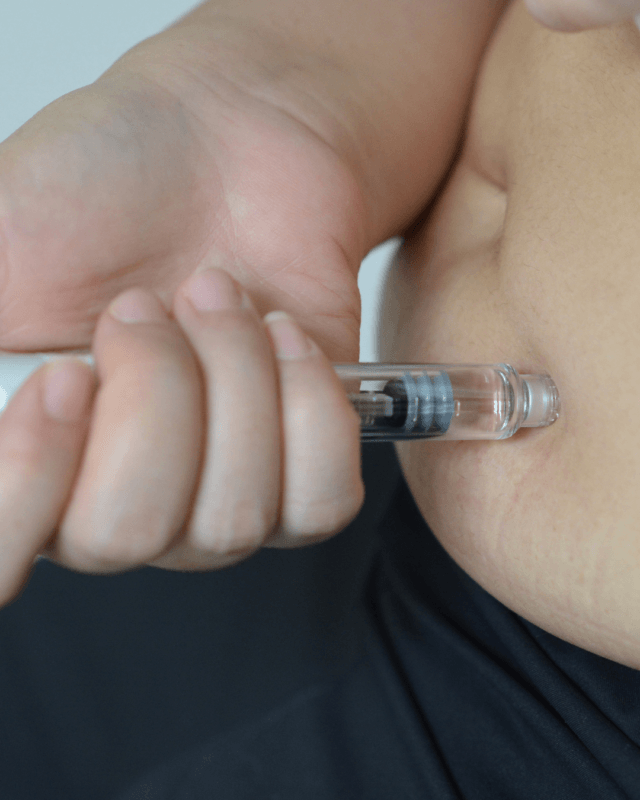
What Are GLP-1 Medications?
GLP-1 medications, including Ozempic, Wegovy and Mounjaro, were originally developed to manage type 2 diabetes. They work by mimicking hormones that tell your brain you’re full, slow down digestion and reduce appetite overall. Because of those effects, they’re now very widely prescribed for weight loss too.
Side effects can include nausea, fatigue, headaches, digestive changes and hair thinning, though people’s experiences vary enormously. For some people these medications are genuinely life-changing. For others, they’re not the right fit at all. And neither of those things says anything about the person taking them.
Why This Conversation Keeps Coming Up for Mums
What’s shifted recently is that weight loss that used to feel unreachable now looks almost effortless on our screens. Celebrities appear to shrink in real time. Friends and family talk openly about their journeys. And when rapid body changes become a constant in the media and in people we see regularly, it quietly starts to reshape the mental picture of what we’re supposed to look like.
For many mums, that’s arriving on top of a relationship with their body that’s already been through a lot. Pregnancy changes everything. Returning to exercise takes time. Feeling at home in your body again doesn’t happen on a schedule, and it certainly doesn’t follow a straight line.
When the unspoken message from the world around you becomes “there’s no excuse anymore,” that’s an enormous amount to carry.
The Comparison Problem Has Got More Complicated
Comparison has always been a complicated thing, but GLP-1 medications have added a layer that didn’t exist before. Body changes are now happening for reasons that have nothing to do with effort, consistency or genetics. The playing field that was never level to begin with has shifted again.
For mums who are showing up week after week, building strength slowly, doing the unglamorous work of sustainable movement, watching dramatic changes in others without context can quietly erode confidence. It makes steady, real progress feel almost invisible by comparison.
And then there’s the judgment that runs in both directions. Some women feel shame for choosing to use these medications. Others feel judged for not using them, as though staying in a larger body now requires some kind of justification. It shouldn’t. But that’s the environment a lot of mums are navigating right now, and pretending otherwise doesn’t help anyone.
What Experts Are Saying About Body Image and GLP-1 Use
Louise Hurley, founder of Strong Mums, clinical psychologist and MumSafe trainer, has spent years working with mums at the intersection of mental health, body image and exercise. Her view on GLP-1 medications is refreshingly grounded: she’s neither for nor against them. What she cares about is what’s happening underneath.
The psychological experience of rapid weight loss can go in very different directions. Some women feel more connected to themselves after losing weight, like they’ve come home to a version of their body that feels familiar. Others feel deeply disconnected from a body that’s changing faster than they can emotionally process. Any mum who’s been through pregnancy will recognise that experience of being in a body that seems to be doing its own thing while you try to keep up.
Underneath both experiences, there’s often a quieter fear that doesn’t get talked about much: what happens when I stop taking the medication? What if the weight comes back? And what does it mean if it does? Those aren’t small questions, and they don’t get answered by a number on a scale.
The Muscle Mass Piece That Mums on GLP-1s Really Need to Hear
This is where movement matters more than people often realise, and it’s worth being clear about why.
When GLP-1 medications are used without structured strength training, weight loss can come predominantly from muscle mass rather than fat. The number on the scale moves, but the composition of what’s being lost isn’t what most people picture. And the consequences of that are real: reduced strength, lower energy, and a body that’s more vulnerable to weight regain if and when the medication is stopped.
For mums using GLP-1 medications, the priority needs to be maintaining muscle through consistent strength training, ideally two to three sessions per week while weight is coming down. That means keeping energy levels supported with regular meals, adequate protein and good hydration, especially important when appetite is significantly reduced and food intake is lower overall. This isn’t an aesthetics conversation. It’s about making sure the body coming out the other side of the medication is genuinely stronger and more resilient than the one that started.
What Actually Good Support Looks Like
Whether you’re thinking about GLP-1 medications, currently using them or have absolutely no interest in them, the kind of support that genuinely helps looks the same: someone in your corner who asks how you’re feeling, not just what you’re lifting or what the scale is doing.
A good trainer working in this space won’t push you toward or away from medication. That’s not their role and it’s not their place. What they will do is help you set goals that mean something beyond a number, build habits that hold regardless of what the scale is doing, and create a training environment where your progress isn’t judged by your dress size or measured against someone else’s journey.
Goal-setting conversations that go deeper than the first answer often reveal something interesting. When you ask a mum why she wants to lose weight, and you keep asking, it’s rarely really about the kilos. It’s about having more energy to get through the day. Feeling confident again. Being able to do things that used to feel impossible. Those outcomes are genuinely achievable, and they don’t all depend on the scale moving to get there.
If You’re Navigating Any of This Right Now
You’re allowed to make your own choices about your body and your health. You’re also allowed to feel uncertain, or conflicted, or quietly worn down by how much noise there is around all of this. Any of those responses makes complete sense.
What you deserve is support that actually meets you where you are. You deserve a trainer who asks how you are feeling, not just how hard you trained. At [your biz name] we look after you. Not just reps and sets. If you want a trainer that truly understands the motherhood journey, send me a DM and we can organise a time to chat.
Find Support That Looks Beyond The Scale
At MumSafe™, we believe women deserve support that recognises the whole person, not just a number on the scale.
Whether your goal is to build strength, improve confidence, return to exercise after having children or simply feel more at home in your body, working with the right support team can make all the difference.
👉 Click here to find a MumSafe™ Trainer near you or online.
Are You A Trainer Who Wants To Better Support Women?
If you’re a fitness professional who wants to confidently support women through pregnancy, postpartum, perimenopause and beyond, MumSafe™ provides education, mentorship and community.
👉 Express your interest in joining the MumSafe™ team here.
Mum-focused author, educator and business owner, Jen Dugard is on a mission to ensure every woman is safely and effectively looked after when she becomes a mother. She is a highly qualified trainer and fitness professional educator and has been specialising in working with mums for over a decade. MumSafe is the go-to place online for women to find mum-focused fitness services that are all accredited, experienced and partnered with women’s health physios so you know you are in very safe hands.