
Returning to Exercise After a C-Section: What Mums Actually Need to Know

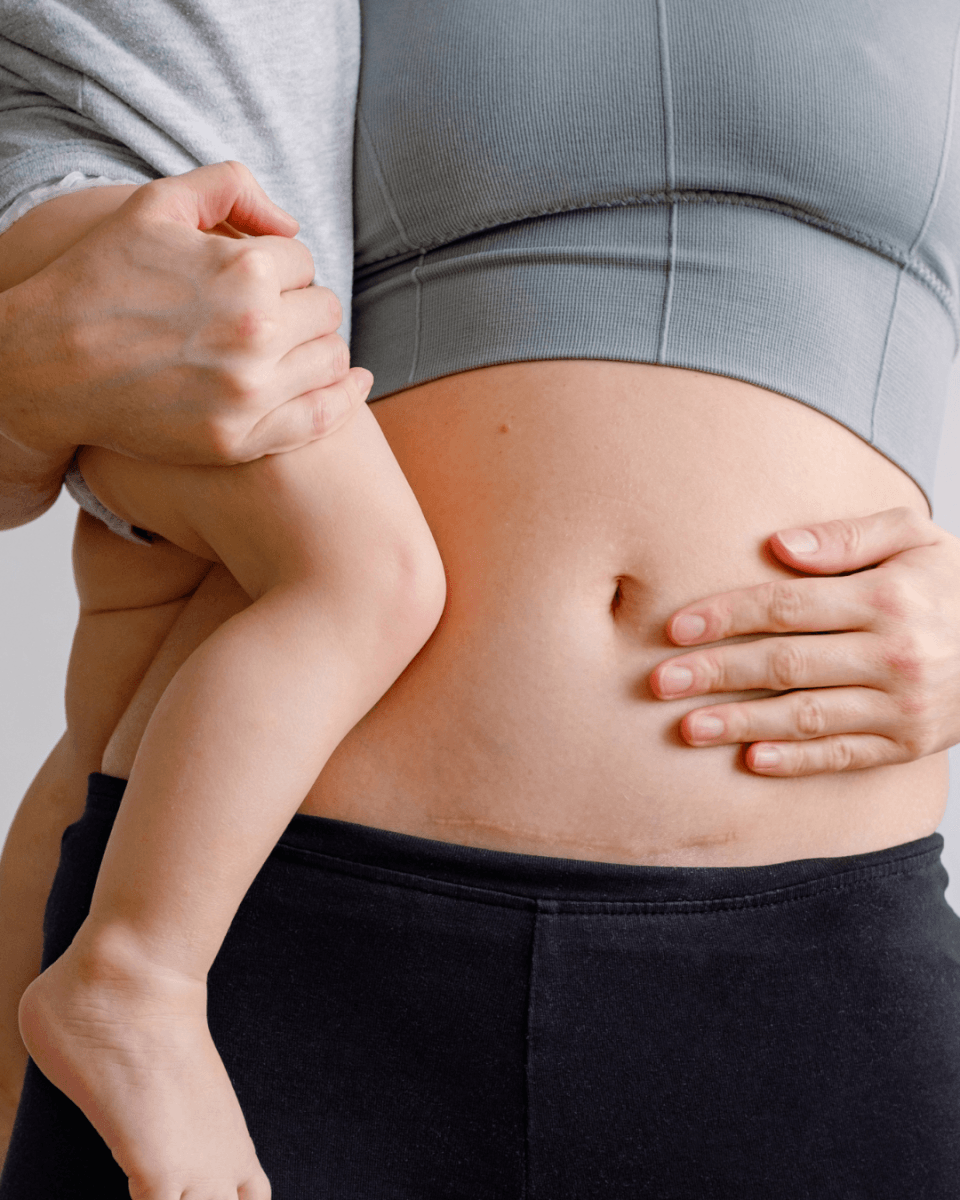
For many mums, the question is not whether they should return to exercise after a C-section, it is when and how to do it in a way that feels safe and supportive.
There is often a mix of advice online, and it can feel unclear what is actually right for your body. Some mums are told to wait a certain number of weeks, while others feel ready to move earlier. What matters most is understanding what your body has been through and how to support it step by step.
A C-section is a major abdominal surgery. It involves multiple layers of tissue, including skin, connective tissue, and the uterus. Even though the abdominal muscles are not typically cut, they are affected by the stretch of pregnancy and the recovery period that follows. This means your core may feel different, weaker, or less responsive in the early weeks.
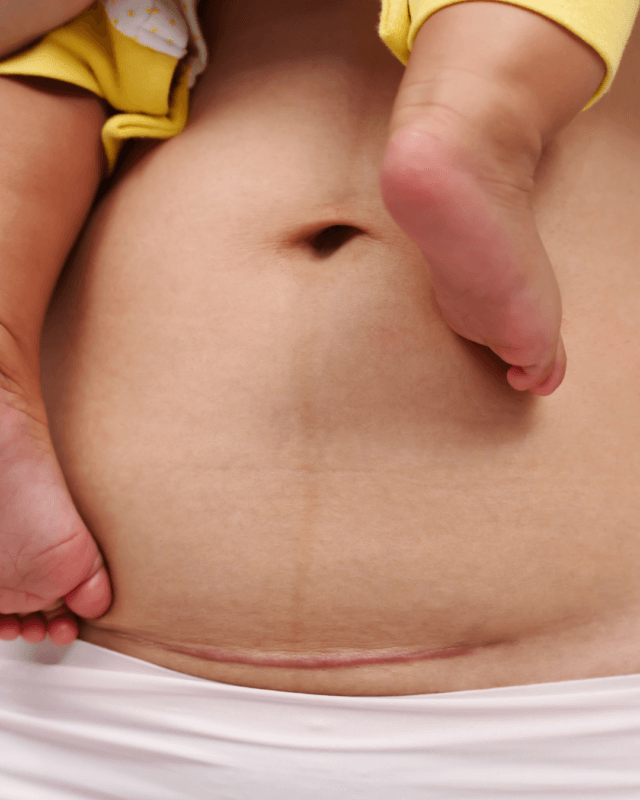
What Your Body Is Recovering From
After a C-section, your body is healing from both pregnancy and surgery at the same time.
The abdominal wall has been stretched over many months. The connective tissue has adapted to support your baby. During surgery, several layers are carefully moved or separated to reach the uterus. These layers then need time to heal and regain strength.
In the early weeks, your body is also adjusting to changes in posture, movement patterns, and daily demands such as feeding, carrying, and lifting your baby.
This is why recovery is not only about the scar that you can see. It also includes the deeper layers that are healing underneath.
The First Stage of Recovery
In the early postpartum period, the focus is not on exercise in the traditional sense. The priority is:
- Managing pain so you can move more comfortably
- Supporting your wound as it heals
- Gradually returning to gentle movement such as walking
- Learning how to move without straining your body
Simple things like getting in and out of bed, standing tall, and walking short distances can make a meaningful difference. Movement supports circulation, reduces the risk of complications, and helps your body begin to feel more capable again.
Many mums find that gentle support around the abdomen helps them feel more secure when they start moving. This can create a sense of stability and encourage better posture.
Reconnecting With Your Core
One of the most important parts of recovery is learning how to reconnect with your core.
This includes your deep abdominal muscles, your diaphragm, and your pelvic floor working together. These muscles support your body during everyday movements such as lifting your baby or getting up from the floor.
In the early stages, this might look like:
- Gentle abdominal activation
- Coordinating your breath with movement
- Light pelvic floor engagement if it feels comfortable
If you are unsure whether you are activating these muscles correctly, this is where support from a women’s health physiotherapist can be very helpful. They can guide you based on how your body is functioning, rather than following a general timeline.
There Is No Single Timeline
You may have heard that you need to wait a set number of weeks before returning to exercise. In reality, recovery does not follow a strict timeline.
Some mums may feel ready to begin gentle exercise earlier, while others may need more time. What matters is how your body feels and how well you can control your movements.
A common approach is to check in around the six week mark with a health professional. This allows your abdominal wall, pelvic floor, and overall movement patterns to be assessed before progressing further.
From there, exercise can be introduced gradually, based on your individual recovery.
What Returning to Exercise Can Look Like
When you begin exercising again, the focus is on building strength in a way that supports your body.
This often includes:
- Functional movements such as squatting, lifting, and carrying
- Strengthening the glutes to support daily lifting tasks
- Improving posture through upper back strengthening and gentle neck support exercises
- Gentle abdominal work that focuses on control rather than intensity
Breathing plays an important role here. Learning to exhale during effort can help manage pressure through your core and pelvic floor.
It is also helpful to consider what your day already involves. Caring for a baby is physically demanding, and your exercise plan needs to fit around that, not compete with it.
Understanding Abdominal Separation
Abdominal separation is common after pregnancy and can still be present after a C-section.
What is important to understand is that the width of the separation is only one part of the picture. The tension and function of the connective tissue are just as important.
Some mums may have a visible separation and still feel strong and capable. Others may have a smaller separation and feel less supported.
Movement is still encouraged. Avoiding exercise completely can lead to more weakness over time. The goal is to build strength with good control and awareness.
Supporting Your Recovery at Home
Your recovery is shaped by more than your workouts. Daily habits play a big role in how your body feels and functions.
Things that can support your recovery include:
- Being mindful of how you lift and carry your baby
- Avoiding breath holding during effort
- Managing constipation to reduce strain
- Taking time to rest when possible
These small adjustments can reduce unnecessary pressure on your core and pelvic floor.
A Gentle Reminder for Mums
Every recovery looks different.
Your experience will be shaped by your pregnancy, your birth, your support system, and how your body responds to healing. There is no single path that fits everyone.
What matters is that you feel supported, informed, and confident in how you move forward.
As a MumSafe trainer, the goal is not to rush you back into exercise. It is to help you rebuild strength in a way that feels safe, steady, and sustainable for your body and your life.
If you’re a mum wanting guidance that works with your body, your recovery and your stage of life, you don’t have to figure this out alone.
👉 Find your local MumSafe™ Trainer near you or online and train with someone educated in women’s health, pelvic floor safety and postnatal exercise. Sessions are designed to support your strength, your recovery and your real life as a mum.
Are you a trainer who wants to confidently support women?
If you’re a fitness professional ready to deepen your understanding of women’s health, hormonal changes and safe programming across life stages, MumSafe™ provides education, mentorship and community.
Learn how to confidently support mums through pregnancy, postpartum, perimenopause and beyond.
👉 Express your interest in joining the MumSafe™ team. Check this link here.
Mum-focused author, educator and business owner, Jen Dugard is on a mission to ensure every woman is safely and effectively looked after when she becomes a mother. She is a highly qualified trainer and fitness professional educator and has been specialising in working with mums for over a decade. MumSafe is the go-to place online for women to find mum-focused fitness services that are all accredited, experienced and partnered with women’s health physios so you know you are in very safe hands.