
What Happens in Early Recovery After a C-Section

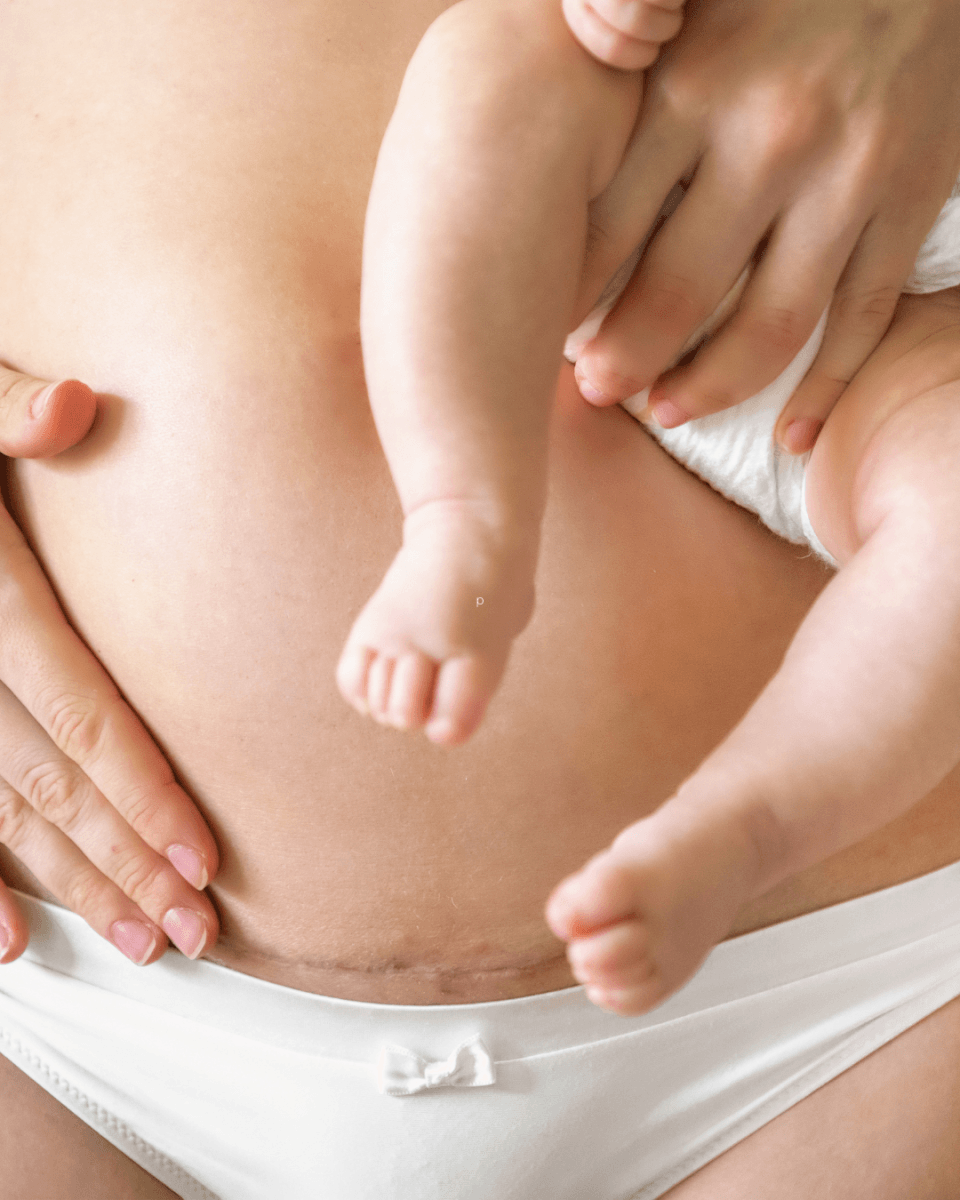
A caesarean is major abdominal surgery and the first few weeks after a C section are about far more than simply resting. Women’s health physiotherapist Giselle Rodrigues, who has spent years working on maternity wards, breaks down what recovery actually looks like in those early days, and why the old “eight to twelve weeks” rule doesn’t hold up the way many trainers were taught.
The First Few Days: Pain Management and Getting Moving
In the ward, the priority isn’t rest in the way people often assume. It’s pain management and wound care, because those two things directly affect how soon a woman can safely get up and move. Good pain control matters because women who are in pain tend to avoid moving altogether, and that inactivity carries its own risks, including blood clots and chest complications.
The early advice is simple. Get up. Walk, even if it’s just around the room. Learn to roll in and out of bed in a way that doesn’t strain the wound. Some women are also fitted with abdominal support, which is a little contentious among obstetricians, but many physios find it helps women stand taller and feel more able to engage their muscles, alongside the practical comfort of feeling supported.
At this stage, lifting is limited to the baby only. Gentle abdominal and pelvic floor activations, and a soft, functional drawing in rather than anything intense, is considered safe as early as two to four days postpartum, provided a woman can actually feel and control the muscles. If nerve sensation hasn’t returned yet and she isn’t sure what she’s doing, that’s a sign to wait rather than guess.
How the Scar Actually Heals
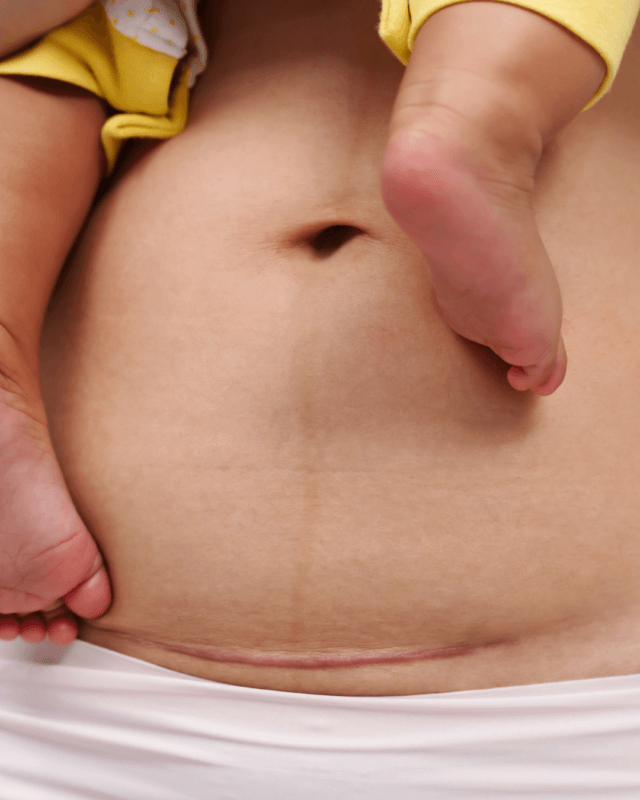
The tissue layers cut during a caesarean take around six weeks to heal, similar to the healing timeline for a bone fracture. By that point, the scar has reached roughly 80 percent strength and is generally considered healed enough for a physio to assess and potentially clear a woman for a postnatal exercise class.
But healing doesn’t stop there. Over the following six months, the scar continues to soften, flatten and become less visible. Some women notice tightness, burning, or a pulling sensation above the scar line, which can be alarming but is often linked to thickening in the surrounding fascia rather than anything more serious. Supportive garments and gentle core activation tend to help this settle. It takes close to a full year for a caesarean scar to fully settle into how it will look and feel long term.
Scar massage, silicone tape and gels are commonly recommended, and while there’s limited certainty around exactly how much difference they make, they’re considered safe to try, and many women find the combination of support and gentle movement genuinely helpful in reducing excess stretch and discomfort.
So When Can Exercise Actually Start?
This is where a lot of outdated advice still lingers. Many trainers have been told to ensure that their clients who have had a caesarean wait 8-12 weeks before returning to exercise. According to Giselle, that blanket timeline is often holding women back rather than protecting them.
The more accurate answer is that there’s no fixed cutoff. Recovery is based on the individual, not the calendar. Around the four to six week mark, most women will have their wound checked by their GP or obstetrician and can see a physio for a more thorough assessment covering pelvic floor strength, abdominal wall function, coordination and posture. From there, low impact activity like walking, swimming and cycling is generally appropriate once healing has taken place, but the pace of progression from there depends entirely on how that individual woman is tracking.
Women who were active and confident with their core and pelvic floor before birth, and who are keen to get back to it, can often be cleared more readily. Others need more time simply managing life at home with a newborn, let alone building in structured exercise and that’s just as valid a place to be.
Why This Matters for How You Train Postpartum Clients
The key message isn’t do this at six weeks, do that at twelve. It’s that every caesarean recovery deserves an individual assessment, ideally through a pelvic health physio, rather than a generic timeline applied to everyone the same way. Some clients will be ready to progress sooner than trainers have traditionally assumed. Others will need longer, and pushing past what their body and their life circumstances can currently manage doesn’t serve them.
Recovery is happening on multiple levels at once, wound healing, scar tissue remodelling, strength rebuilding, and simply adjusting to life with a new baby. Meeting a woman where she actually is, rather than where a rule of thumb says she should be is what supportive postpartum training looks like.
Find a MumSafe™ Trainer near you or online and train with someone educated in women’s health, postnatal recovery and safe, progressive exercise. Sessions are designed to support your recovery, your strength and your wellbeing as a whole person, not just your fitness goals.
👉 Click here to find a MumSafe™ Trainer near you or online.
Are you a trainer who wants to better support mums recovering from a C-section?
If you’re a fitness professional wanting to deepen your understanding of caesarean recovery, scar healing and safe programming for postpartum mums, MumSafe™ provides education, mentorship and community to help you feel confident supporting women through every stage of motherhood.
👉 Express your interest in joining the MumSafe™ team here.
Mum-focused author, educator and business owner, Jen Dugard is on a mission to ensure every woman is safely and effectively looked after when she becomes a mother. She is a highly qualified trainer and fitness professional educator and has been specialising in working with mums for over a decade. MumSafe is the go-to place online for women to find mum-focused fitness services that are all accredited, experienced and partnered with women’s health physios so you know you are in very safe hands.